
 Michael Gordon Oldfield
 Was
born in the town of Reading, England on May 15, 1953. His father, Raymond, was a
doctor who owned a guitar acquired while serving in the Royal Air Force in Egypt
during World War II. Mike remembers that his father "used to play the guitar
every Christmas Eve, singing the only song he knew, Danny Boy". Mike also
attributed his early interest in music to the virtuoso guitarist Bert Weedon:
"I saw him on television when I was seven and immediately persuaded my father to
buy me my first guitar. In fact, if it wasn't for Bert I might never have taken
it up in the first place." The Oldfields turned out to be a musical family.
Mike's older brother Terry later became a composer of film and television
music and his sister Sally went on to be a professional singer.
Was
born in the town of Reading, England on May 15, 1953. His father, Raymond, was a
doctor who owned a guitar acquired while serving in the Royal Air Force in Egypt
during World War II. Mike remembers that his father "used to play the guitar
every Christmas Eve, singing the only song he knew, Danny Boy". Mike also
attributed his early interest in music to the virtuoso guitarist Bert Weedon:
"I saw him on television when I was seven and immediately persuaded my father to
buy me my first guitar. In fact, if it wasn't for Bert I might never have taken
it up in the first place." The Oldfields turned out to be a musical family.
Mike's older brother Terry later became a composer of film and television
music and his sister Sally went on to be a professional singer.
By the age of ten, Mike was already composing instrumental pieces on acoustic guitar. The guitar was more than just an instrument to him. It was a way out of a family situation that was harrowing and had in many ways cut him off from the world at large.
Throughout the previous decade there had been a very healthy acoustic music scene in England. The music was performed at the many folk clubs opened during this period. It was at the local folk club that the young Mike Oldfield began to gain the sense that his musical ideas might have a wider audience.
"I used to have two fifteen minute instrumentals which l'd play at the local folk clubs in which I would go through all sorts of moods", he recalled. "I even did bits of detuning the strings totally and playing and bending the strings around the neck and doing all kinds of stuff. The minute I came home from school the entire weekend would be spent practising and playing guitar." He was also getting involved with electric music, playing instrumental pieces by The Shadows in an amateur beat group.
When Mike was 13 the Oldfield family moved to Romford in Essex. In 1967 he left school and with his sister Sally formed Sallyangie, a folk voice and guitar duo. They were signed up by the Transatlantic record label which issued the album "Children Of The Sun" in 1968 and a single Two Ships in 1969. At this stage, Mike's guitar playing was strongly influenced by the "folk baroque" style popularised by John Renbourn and Bert Jansch.
After a year, Sallyangie came to an end. Mike turned back to rock music, forming a short-lived group called Barefoot. This led to a job as bass player with Kevin Ayers & the Whole World. Ayers had been a founder member of Soft Machine but left the group in 1968. The following year he made a solo album "Joy Of A Toy", forming a touring band in March 1970. Among the members of the Whole World was David Bedford on keyboards. A classically-trained composer, Bedford became close friends with Mike, encouraging him in his composition of an early version of "Tubular Bells". While touring with the Whole World, Mike came into contact with Centipede, a very large jazz orchestra led by Keith Tippett. The range of instruments involved was one influence on the multi-instrumental character that Mike later gave to his own compositions.
Kevin Ayers & the Whole World made two albums, "Shooting At The Moon" and "Whatevershebringswesing" before splitting up in August 1971. By now Mike was playing lead guitar and his proficient solos with Kevin Ayers were already gaining him a reputation as a master musician. He later described his own stage performance with the Ayers band. "I would do an electric guitar solo and depending on how pissed I was, I used to let it feed back and do somersaults all over the floor".
1971-1973 The road to Tubular Bells
During this period he began to put together the musical ideas that were to result in "Tubular Bells". Using a tape recorder borrowed from Kevin Ayers he discovered that by masking the "erase" head with a small piece of cardboard he could record more than one instrument. By using this device he was able to commit to tape the motifs and instrumental ideas required to realise an ambition. That ambition was to create a symphonic work, similar to the large-scale compositions for full orchestra in several movements found in classical music. With the tape equipment set up in his bedroom at the house which he shared with other members of the Kevin Ayers band, the ideas for the new work slowly began to take shape.
Having set to work to create this music, Mike decided to play all of the instruments himself. With his natural gift for playing, he had discovered that he could get a tune of almost any instrument from a glockenspiel to a grand piano, a classical guitar to a Farfisa organ. While still working with Kevin Ayers, he had contributed to recordings made at the famous Abbey Road studios in London. He soon found that the studio had a storeroom that was full of all kinds of instruments. By arriving early for the sessons he was able to experiment with these instruments and to incorporate new sounds and textures into his musical ideas.
Working on his own meant that all of the deep emotions he was experiencing at this time went into the music. In any case, it is doubtful whether Mike's state of mind would have allowed him to endure the pressure of working with others for long. This is especially true of a work that increasingly became a vehicle for expressing emotions which he was finding it harder and harder to live with.
Having created a rough tape of his ideas he set off around the music industry to try to convince someone to take the project on. His efforts were met with universa rejection. He was told the project was "not marketable", meaning that if it were made at all nobody would want to buy it.
Obviously this was to put his faith in the work to the test. Having composed the hypnotic opening, the original motif (the theme that is repeated and developed in an artistic work), a vision of the ultimate success of the work never left him. If only he could get it recorded, released and promoted!
A chance meeting opened the way to that future Mike had left the Kevin Ayers band and, to earn a living, he took occasional jobs as a guitarist. One of these was working in the house band of the London production of Hair, the "tribal love rock musical" for £5 a night. He also briefly played bass with a band led by soul singer Arthur Lewis. The group went to record at a recently opened studio located in a manor house at Shipton on-Cherwell, 20 miles from Oxford.
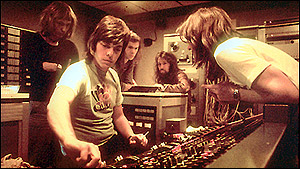 The
Manor recording studios were being built for Richard Branson by Tom
Newman, assisted among others by Simon Heyworth. The team were all
friends. There were also various girlfriends in attendance as well as a cook and
cleaners and gardeners.
The
Manor recording studios were being built for Richard Branson by Tom
Newman, assisted among others by Simon Heyworth. The team were all
friends. There were also various girlfriends in attendance as well as a cook and
cleaners and gardeners.
As Mike was later to recall, "the whole thing felt like some sort of great big family".
The atmosphere at the studio and the attitude of Newman and Heyworth allowed Mike the opportunity to play a rough tape of his musical ideas The immediate reaction from both men was that they loved itl Heyworth and Newman then undertook a campaign to convince Branson to release the work and to provide studio time at The Manor to get it recorded. An initial approach convinced them that the time was not right. The project had to await the arrival of Simon Draper who joined Branson to set up the Virgin label. Draper had wide musical knowledge and, on hearing Mike's ideas, he was immediately enthusiastic.
Mike had continued to rehearse and to refine his ideas which now had been given a name: Tubular Bells (earlier titles had included Breakfast In Bed and Opus One). But he had almost given up hope of being able to realise his dream when Draper offered a week of studio time at The Manor. A large section of instruments was assembled in the studio and work commenced. During that week Mike succeeded in recording most of the first part, with the rest of the work recorded at random sessions over the following months.
From the start Mike was pushing the then "state-of-the-art" recording facilities to the limit. Very soon all 16 tracks were in use. As more and more instruments were recorded, the sessions became a test of Heyworth and Newman's inventive skills as sound engineers as well as a test of their memories.
The track sheet stretched most of the way across the studio floor. The studio equipment was not automated and all the work was done by hand with Mike, Simon Heyworth and Tom Newman using all available fingers on the mixing board. This was no producer/artist relationship but one where all three men learned together as they went along.
During the sessions Mike played more than 20 instruments and over 2000 tape overdubs were made. The music was all his own work with the exception of Viv Stanshall (vocals), Jon Field (flute), Steve Broughton (drums) and Mundy Ellis (vocals). Tom Newman and Simon Heyworth were credited as co-producers. When the sessions were completed, Branson took the tapes of Tubular Bells to the music industry trade fair, MIDEM, in Cannes in January 1973. One executive of an American company told him, "slap some vocals on it and i'll give you $20,000". When nobody showed interest, Branson and Draper decided to release the album on their new Virgin Records label.
Tubular Bells was issued on May 25, 1973. The work emerged from the recording and mixing process as truly original art. Critics did their best to define it. The public simply took it to their hearts.
The reviews in the UK press were ecstatic. The influential radio disc jockey John Peel wrote that it was "a record that quite genuinely covers new and unchaJed territory", with music that "combines logic with surprise, sunshine with rain". "A vast work, almost classical in its structure and in the way a theme is stated and deftly worked upon," said the Melody Maker. Some reviewers also thought they knew what Mike's influences were "The texture of Tubular Bells owes much to Sibelius, Vaughan Williams, Michel Legrand and the Last Night Of The Proms," wrote the television producer Tony Palmer. Tubular Bells will always stand on its own as a moment in the history of "rock music" that captured the heart and imagination of so many people, It is also a starting point from which to appreciate the many changes and discoveries made by its creator as he grew from a 19-year-old into maturity. The album went into the UK charts in July and soon rose to No. 1. Tubular Bells began to sell all over Europe.
In June 1973, a live performance of Tubular Bells was given at the Queen Elizabeth Hall in London. Joining Mike on stage were guitarists Mick Taylor (of The Rolling Stones), Steve Hillage (Gong), Fred Frith (Henry Cow) and Ted Speight. There were also David Bedford, Kevin Ayers and Pierre Moerlen, the percussion player from avant-garde rock band Gong who would be one of Mike's regular musicians for many years to come. Although billed to appear, Stevie Winwood was unable to perform because he had not been able to attend enough rehearsals. The response of the audience was described by the reviewer from the New Musical Express, "The entire audience rose to its feet and hollered for more. It was one of those rare spontaneous outbursts of appreciation."
Tubular Bells was also issued in the US but it was slower to achieve success there. The boost needed for the album to sell in large numbers came when film director William Friedkin decided to use a four-minute extract in the controversial horror movie The Exorcist. Mike had not been consulted about the association of his work with the film and told interviewers that he was less than happy about it. In the UK, a Tubular Bells single was also released along with a remixed version of the album in the new "quadraphonic" format, a sound system that needed four speakers for its full impact. To show of the wonders of the system, the "quad" Tubular Bells included an extra sequence of an aeroplane flying around which was inserted after the Sailor's Hornpipe.
1974-1975 The relunctant star
Mike Oldfield had dreamed about the succedd that would come if ever Tubular Bells were released. When that success arrived he found the pressure very hard to cope with. Emotionally exhausted by the process of recording Tubular Bells, he retreated to a new home he had found for himself in Herefordshire. It was here that he began to create his next work which was to be named after the nearby Hergest Ridge.
Released in England in September 1974, like Tubular Bells it was an album containing a single composition. Again almost all the instrumental work was by Mike himself. The effect most commented on by reviewers was the section in which 90 multitracked guitars created the effect of what one critic called "an electronic thunderstorm". The other musicians contributing to the album included Sally Oldfield and Clodagh Simmonds (vocals), June Whiting and Lindsay Cooper (oboes) and Ted Hobart (trumpet). For Mike, the composition of music was a constant work in progress. The symphonic form used in Tubular Bells was continued in a series of later works: Hergest Ridge, Ommadawn, Incantations, QE2 and Amarok.
Hergest
Ridge went straight to the top of the UK album chart. Virgin Records took out
television advertising, although the wording of the commercials had to be
changed. The advert sement had originally stated that the album would be
available from "Virgin and other immaculate record shops". This was deleted
because of possible objections from the Catholic Church. Although a few thought
it inferior to Tubular Bells, the overwhelming majority of the critics
loved Hergest Ridge. One called it "the closest rock music has got to the
classical symphony". Another wrote of "a series of emotional peaks bursting here
and there through the tickling tranquillity".
In December 1974, orchestral arrangements of Tubular Bells and Hergest Ridge were performed at the Royal Albert Hall in London. The concert was planned by David Bedford who conducted the Royal Philharmonic Orchestra with guitar solos by Steve Hillage. Mike himself played guitar on the studio recording of the same works, released in early 1975 as The Orchestral Tubular Bells. Later that year these orchestral arrangements were performed in Glasgow and Newcastle. In Scotland, Steve Hillage played the guitar parts with the Scottish National Orchestra, and the soloist in the northeast was Andy Summers, later of The Police.
The sense of humour evident in the "introduction to the instruments" section of Tubular Bells was well to the fore on Don Alfonso, a single issued in March 1975. With the aid of Chris Cutler (drums), David Bedford (vocals) and Kevin Ayers (wine bottles), Mike told the story of a bullfighter who "worked for Oxo".
In a more serious vein, he released Ommadawn in September 1975 His third great work of symphonic rock, it had taken nine months to record. On Ommadawn, Mike played almost 20 instruments ranging from guitars to grand piano and spinet. The album incorporated music from Africa and Ireland through the London-based percussion group Jabula and the uillean piping of Paddy Moloney, leader of the Chieftains. Other contributing artists included Terry and Sally Oldfield, members of the Hereford City Band and local recorder-player Leslie Penney. Penney was also featured on Mike's Christmas single, a version of the traditional carol In Dulci Jubilo. The record got to No.4 in the UK charts.
Although most reviewers greeted Ommadawn as another triumph, a tone of resentment at Mike's continuing success crept into some critics' comments on the album. Perhaps influenced by the growing fashion for "back to the roots" pub rock, one UK pop paper called Ommadawn "bland and inconsequential, excellent back ground music for dinner parties".
Although he had not yet returned to touring or live performance of his own work, Mike contributed to albums by other musicians with whom he was associated. His guitar-playing could be heard on records released in 1975 by David Bedford, Edgar Broughton and Tom Newman.
The impact of Tubular Bells continued into 1975. In that year the work was named Best Instrumental Composition at the Grammy awards in New York and the newfound popularitv of the instruments themselves caused manufacturers Premier to launch a new range ot rigid-trame chimes. In another dimension, a reader wrote to Mayfair magazine: "the most exciting moment of my sexual life was achieved only recently when we both finaly managed to climax together at the finale of Tubular Bells by Mike Oldfield".
1976-1978 Out of the limelight
The following year the now world-famous Tubular Bells theme appeared as a disco record by the Champs Boys, a bunch of French session musicians. It was almost all that was heard of Mike's music in 1976, although fans of equestrian sports heard an extract from Ommadawn introducing the televised coverage of The Horse Of The Year Show.
Mike withdrew from public view for most of the three years from 1976 to 1978. He later told interviewers that he had psychological problems but he was also working in rural Gloucestershire on the music that would be released as Incantations.
To keep him in the public eye, Virgin compiled Boxed, a four-record set comprising the three albums already issued and a fourth containing singles, guest appear ances on other adists' records and an unreleased vocal by Mike on Speak (Tho' You Only Say Farewell).
The only new work from Mike himself in 1976 was the Christmas single, Portsmouth, another traditional tune arranged by Oldfield. This got to No. 3, one place higher than In Dulci Jubilo.
In Januay 1977 Mike made his first stage appearance for two-and-a-half years as a guest guitarist in a performance of David Bedford's suite The Odyssey. He followed this with the release in quick succession of two singles. These were a version of the William Tell Overture and Cuckoo, another arrangement of a traditional English folk tune. Neither was a hit.
Although Mike himself was inactive for the rest of the year, his works continued to receive live performances. In May, Steve Hillage repeated his solo appearance with the Scottish Symphony Orchestra in Tubular Bells and Hergest Ridge, while what was announced as the first live performance of Ommadawn was given at Trinity College, Dublin by the Liffoy Light Orchestra.
The fourth album of original material, Incantations, finally appeared at the end of 1978 In the years since Ommadawn, the British pop world had been turned upside-down by the arrival of punk rock. Shut away in his country retreat, the impact of punk had passed Mike by. Asked in 1977 by an interviewer for his views on this new trend, he had answered, "Punk rock ? I've never heard of it." The changed atmosphere caused Incantations to be less successful than its predecessors, although it still reached the Top 20 in Britain. Out-takes from Incantations plus portions of Tubular Bells and Portsmouth were used on the soundtrack of The Space Movie, a television documentary by Tony Palmer which celebrated the tenth anniversary of the July 1969 moon landing by US astronauts.
Around this time Mike undertook numerous interviews to promote the album and to talk about his change of personal outlook. This was caused by his attendance at a seminar held by exegesis, a form of therapy designed to enhance individual assertiveness. Through exegesis, he believed he had discovered a more positive side to his character. In a press release of the time he was quoted as saying, "I underwent what I would describe as a 'rebirth' experience, which gave me a lot of insight into myself and human nature. I have started again."
In March 1979, Mike released a single, Guilty, that showed a movement towards more contemporary rock sounds. Some reviewers detected a 'disco' feeling in the track which he recorded with session musicians in New York. Later in 1979 came Platinum, his fifth album of original material. This broke with the pattern of the four earlier records in that it contained a range of material. The main composition, Platinum, was broken into five sections and interspersed with shorter songs and instrumentals. Among these were Punkadiddle ment, and Sally, a song for the mother of his young daughter Molly. As well as musical contributions from his siblings Sally and Terry, Platinum included vocals from Maddy Prior of folk-rock band Steeleye Span.
The decade ended for Mike with the release of a Christmas single for the fourth successive year. Like Portsmouth, Blue Peter was a naval hornpipe and already widely known as the theme of a children's television show of the same name. Despite this, Mike's single only reached No. 19 in the UK chart. Royalties from Mike's Blue Peter single were donated to the Cambodia appeal launched by the children's television programme of the same name.
1979-1984 Band on the road
Although he is a master of the recording studio, live performance has played an important part in Mike's artistic life. Having been through therapy in the late 1970s, he felt ready to take a large group of musicians on the road. This resulted in the live set, Exposed.
The first Mike Oldfield tour took place in 1979 It began almost six years after Tubular Bells were released. The lavish show was performed by an orchestra and chorus of 50 musicians. There was a crew of 25 roadies and technicians and three articulated lorries full of equipment. Among the performers were Maddy Prior (performing the sequence from Longfellow's poem Hiawatha included in Incantations), guitarists Phil Beer and Nico Ramsden and Pierre Moerlen with his brother Benoit on percussion. The troupe also included two traditional folk musicians, Robin Morton and Ringo McDonough, as well as members of the Queens College Girls Choir. There was also a visual dimension incorporating films specially made by lan Eames.
The tour opened in Madrid and Barcelona where Mike and the musicians performed Incantations and Tubular Bells to what one journalist called "an audience of 30000 frenzied young Spaniards". There were 11 further concerts in Belgium, France, Holland and Germany which were a success with critics and audiences alike. In August, Virgin released Exposed, a double live album recorded during the tour. In later years, Mike revealed that the tour itself had been a financial disaster.
In the spring of 1980, Mike formed an eleven-piece group for a 40-date tour of Europe with a show featuring material from Platinum. Its members included saxophonist Bimbo Acock, Pierre Moerlen and vocalist Wendy Roberts. Ian Eames again provided film sequences for back projection including a shimmering seascape in which a glider soared and turned. The live shows culminated at the Knebworth Festival in July. After flying in by helicopter, he was second on the bill to The Beach Boys and Lindisfarne: Santana also performed. The excellence of Mike's musicianship won over the Record Mirror reviewer, who wrote "the sound was crystal clear, highlighting the new colour and shading of his arrangements." In keeping with the new emphasis on lighter aspects of his work he issued two cover versions as singles in the autumn of 1980, The first was Arrival, a tongue-in-cheek salute to Abba, one of the new pop bands which had pushed progressive rock away from centre stage in the pop scene. This was followed by a more wholehearted tribute. Wonderful Land was a revival of a 1962 tune by The Shadows whose leader Hank Marvin had been an inspiration to all junior guitarists of Oldfield's generation.
It is ironic that many people who do not know his work well look upon Mike as primarily a keyboard player. His main instrument is in fact the guitar. His guitar work has many references to the styles of John Renbourn and Bert Jansch, two acoustic instrumentalists who were an early influence on him. He spent many hours analysing and learning their music and through this process he developed a formidable guitar technique. As an electric guitar player Mike can stand comparison to the best England has produced.
Both Arrival and Wonderful
Land appeared on QE2, an album in the mould of Platinum This time the
title track took up side one of the album and reappeared as a finale at the end
of side two. QE2 was co-produced with engineer David Hentschel who had
prevously worked with Genesis, Hentschel told an interviewer, "I've aways
loved Mike's stuff. All his ideas were fresh to me and all mine fresh to him. It
was all great fun and I believe it's got to be fun if you want to do a really
good job." The contributing musicians on QE2 included Phil Collins on
drums, Rick Fenn (guitar) and singer
 Maggie
Reilly. The former vocalist with the Scottish soul/rock band Cado Belle,
Reilly was to remain an important member of the Oldfield team for the next five
years. The reviews for QE2 were mixed, with even some of Mike's strongest
supporters in the press believing he was "marking time" rather than presenting
new ideas. However, Mike's fans among the music paper readership struck back.
One wrote to Record Mirror to attack "the critics who have not an inkling of his
true greatness. In 50 years' time, his music will still be listened to and
enjoyed." Touring was now becoming an annual event. The 1981 tour of Europe and
Britain was made by a much smaller band whose nucleus was Maggie Reilly,
Tim Cross (keyboards), Rick Fenn (bass) and percussionists
Morris Pert and Mike Frye. If his more recent albums were no longer
heading the charts, the phenomenal success of Tubular Bells continued In July
1981, Virgin announced that the ten-millionth copy of Tubular Bells had been
sold, In the same month, Mike played a "free concert" as part of the City of
London celebrations of the marriage of Prince Charles and Lady Diana
Spencer. In recognition of this and his "services to exports" he was Later
awarded the freedom of the City of London. Earlier he had joined such luminaries
as Billy Idol, Phil Lynott and Noddy Holder as a judge for
a national pop group talent contest,
Maggie
Reilly. The former vocalist with the Scottish soul/rock band Cado Belle,
Reilly was to remain an important member of the Oldfield team for the next five
years. The reviews for QE2 were mixed, with even some of Mike's strongest
supporters in the press believing he was "marking time" rather than presenting
new ideas. However, Mike's fans among the music paper readership struck back.
One wrote to Record Mirror to attack "the critics who have not an inkling of his
true greatness. In 50 years' time, his music will still be listened to and
enjoyed." Touring was now becoming an annual event. The 1981 tour of Europe and
Britain was made by a much smaller band whose nucleus was Maggie Reilly,
Tim Cross (keyboards), Rick Fenn (bass) and percussionists
Morris Pert and Mike Frye. If his more recent albums were no longer
heading the charts, the phenomenal success of Tubular Bells continued In July
1981, Virgin announced that the ten-millionth copy of Tubular Bells had been
sold, In the same month, Mike played a "free concert" as part of the City of
London celebrations of the marriage of Prince Charles and Lady Diana
Spencer. In recognition of this and his "services to exports" he was Later
awarded the freedom of the City of London. Earlier he had joined such luminaries
as Billy Idol, Phil Lynott and Noddy Holder as a judge for
a national pop group talent contest,
To end a year in which it seemed that Mike had become part of the establishment, he was included in Who's Who, the exclusive guide to Britain's "top people": the only pop musician to appear there apart from Paul McCartney. When asked why Mike Oldfield had been chosen for the book, a Who's Who staff member said she wasn't too certain, "but he is someone everyone has heard of, isn't he?"
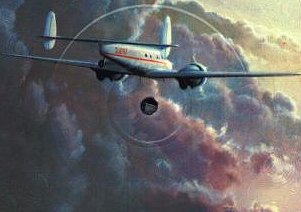
In his Who's Who entry, Mike listed his recreations as "aviation (light aircraft, helicopters)". He had gained his pilot's licence in 1979, and a flying incident a year later provided the inspiration for the title song of the 1982 album Five Miles Out. In August 1980, Mike was piloting a two-engined Piper Navajo over the Pyrenees mountain range in Spain when the aircraft was caught in a thunderstorm. "We were tossed about like a pancake and there was ice collecting on the propellers and rain on the windscreen and everybody was going aaargh!" he told an interviewer. The incident was also commemorated in a painting specially commissioned by Mike from a renowned aviation artist.
Like Platinum and QE2, Five Miles Out combined one long track with a series of individual songs. The long piece was Taurus II which included contributions from piper Paddy Moloney and a morris dance team. Among the songs was a highly contemporary pop tune, Family Man with vocals by Maggie Reilly. When it was issued as a single Family Man only got to the lower reaches of the UK charts. The next year, however, a version by Daryl Hall and John Oates was a Top 10 hit in America.
Family Man was an early example of another musical form which Mike has challenged himself to work within Moonlight Shadow, Family Man, Shadow On The Wall, Five Miles Out and Islands are very much pop songs but again they make use of dynamic change and texture.
Much of the Five Miles Out album vas recorded at a studio installed at Mike's home in Buckinghamshire. The house was chosen because of its easy access to London and to a local airfield from which Mike could fly his planes.
Five Miles Out was Mike's biggest UK hit since Ommadawn, and its success was achieved despite the fact that the reviews in the music press were turning negative. His single Mistake was dismissed by one writer as "mid-70s stadium rock" while another critic complained that "Oldfield still fiddles with himself for no conceivable rhyme nor reason." But Mike gave as good as he got. Asked for his "pet hates" by the New Musical Express, he replied, "I probably hate your decrepit newspaper more than anythng else in the world." He also told the NME that his favourite film was 2001: A Space Odyssey and his heroes were Sibelius and Captain Kirk (of the television series Star Trek).
In 1982 Mike undertook his biggest tour to date, playing in both Europe and North America. For the world tour he formed a new group which featured Maggie Reilly and ex-Gong drummer Pierre Moerlen with two keyboard players. A London concert was reviewed sympathetically by Ray Coleman in the Daily Express who described the audience as "young married couples who want to sit comfortably and absorb music for a night out".
May 1983 was the tenth anniversary of the release of Tubular Bells. Mike himself issued his eighth album, Crises and played a major concert in July at Wembley in London. His backing group for the Wembley gig included drummer Simon Phillips and Phil Spalding, the former bass player with Toyah.
Crises was the first recording made with Simon Phillips as co-producer. Its vocalists included Jon Anderson of Yes and Roger Chapman formerly of Family (on Shadow On The Wall) as well as Maggie Reilly. The outstanding track was Moonlight Shadow. Sung by Maggie Reilly it was widely understood to be a tribute to the late John Lennon and it became Mike's most successful single since Portsmouth seven years earlier.
1984 was one of the busiest years in his career. It began with the news that a donation of £300 from Mike to the town of Presteigne in the Welsh border country near his former home where Hergest Ridge had been written. The money was to pay for the town's church bell to be rung every night in compliance with the terms of a 1565 will of a local wool merchant.
His professional activities in 1984 included the release of a new album, a 50-concert European tour and the preparation of his first full-length film score. The film music was for The Killing Fields, Roland Joffe's highly-praised movie about the Cambodian civil wars Mike found it hard to compose for such a "harrowing and emotional film". To compose the music he used a video synchroniser linked to his Fairlight synthesiser. Much of the score was based around ethnic music from Cambodia. The haunting theme Etude, adapted from a piece by Francisco Tarrega, was issued as a single in December.
The 1984 album Discovery was the first to be made by Mike outside England. He built a studio in a house 2000 metres up on a Swiss mountainside overlooking Lake Geneva where, with Phillips, he co-produced a new selection of songs with an instrumental entitled The Lake. This time the vocals were shared between Maggie Reilly and a newcomer, Barry Palmer. Among the songs was To France, inspired by the life of Mary Queen of Scots. Although only moderately successful in the UK, To France was a big hit across Europe.
By now Mike's abilities as a rock guitarist were bringing him a new following among heavy metal fans. In the metal magazine Kerrang!, veteran journalist Chris Welch enthusiastically quoted the ancient Greek writer Thucydides in praise of Discovery: "For we are the lovers of the beautiful yet simple in our tastes, and we cultivate the mind without loss of manliness."
Music from Discovery was strongly featured in the programme of the 1984 European tour by what had become a house band featuring Maggie Reilly, Simon Phillips, Phil Spalding and Barry Palmer.
1985-1988 Video years
In 1985, Virgin decided it was time for a retrospective selection of material from Mike's 12-year recording career. A double album called the Complete Mike Oldfield was issued. One of the four sides was devoted to unreleased live recordings from the previous five years. It included some notable guitar playing from the Platinum tour of 1980.
By now Mike's studio interests were moving towards the use of video in creating musical works. He had equipped his home studio in Buckinghamshire with state-of-the-art equipment like a Quantel Mirage computer with which he generated images for Pictures In The Dark. With singers including Barry Palmer and the 15-year-old boy soprano Aed Jones, this was conceived as a "video single" and issued in December 1985.
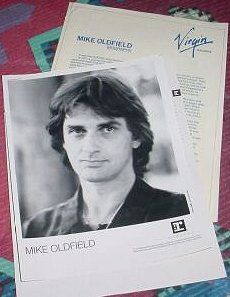 The
Oldfield home studio was also stocked with seven synthesizers, and in a 1986
interview Mike described his working methods as being diametrically opposed to
those musicians who liberally sampled extracts from other people's recordings:
"I take a lot of my own samples and usually make some at the end of the session
from whatever instrument we've been using." In a later interview he explained
his belief in starting from real instruments and not synthesized sounds: "What I
object to in computer music is actually listening to the computer performing.
It's like some kind of sophisticated pianola or barrel organ, it's completely
soulless."
The
Oldfield home studio was also stocked with seven synthesizers, and in a 1986
interview Mike described his working methods as being diametrically opposed to
those musicians who liberally sampled extracts from other people's recordings:
"I take a lot of my own samples and usually make some at the end of the session
from whatever instrument we've been using." In a later interview he explained
his belief in starting from real instruments and not synthesized sounds: "What I
object to in computer music is actually listening to the computer performing.
It's like some kind of sophisticated pianola or barrel organ, it's completely
soulless."
During 1986 Mike concentrated on the creation of a video album, eventually released in October 1988 on video cassette and laser disc as Wind Chimes. Among his collaborators on the visual side was director Alex Proyas who created the video for the track Magic Touch and had previously worked with Crowded House and other bands. The only new recording issued by Mike during 1986 was the single Shine with vocals by Jon Anderson.
The audio album to accompany Wind Chimes was Islands, released in September 1987. The two-part Wind Chimes instrumental piece was inspired by music heard by Mike on a visit to Bali and was co-produced with Simon Phillips. Among the musicians contributing to the Islands album were Kevin Ayers, former Roxy Music saxophonist Andy Mackay and Geoff Downes on keyboards. The featured singer on the title track was Bonnie Tyler, and in October 1987 Mike made a rare television appearance performing the song with Bonnie.
1989-1991 End of the Virgin era
In 1989, Mike created a seven-minute version of Tubular Bells to be performed on the Nicky Campbell show on the BBC Radio One radio network. This helped to rekindle the idea of creating a follow-up to his great album, reworking its themes with 1990s music technology Tubular Bells II had been on the agenda for many years. Executives at Virgin Records had been eagerly awaiting it and in 1982 the New Musical Express ran a big story declaring that TB II was imminent! Now Mike was preparing himself to produce that follow-up album.
Before that was to happen, he released three more recordings. The first was Earth Moving in 1989 which featured no less than seven lead vocalists among its nine tracks. Maggie Reilly returned to sing Blue Night while former Manfred Mann's Earth Band member Chris Thompson was lead vocalist on two tracks.
Amarok (1990) was a return to the format of the great trilogy of 1973. Like Tubular Bells, Hergest Ridge and Ommadawn it was a single symphony-length composition. Amarok reunited Mike with Tom Newman who had engineered Tubular Bells. In many ways it is the later work that most resembles Tubular Bells itself. The bells themselves make a reappearance as does the Caveman.
 Amarok
is a 52-minute unbroken piece of music which shifts styles from English folk
music to Spanish flamenco to African and it fuses the latest studio and musical
technology with typical Oldfield devices. It is interesting to contrast the
sound produced by 1990s "state-of-the-art equipment" with that created at the
newly-opened Manor studios on Tubular Bells. But in both cases Oldfield
shows his mastery of all the latest advances and his ability to incorporate them
into the creative process.
Amarok
is a 52-minute unbroken piece of music which shifts styles from English folk
music to Spanish flamenco to African and it fuses the latest studio and musical
technology with typical Oldfield devices. It is interesting to contrast the
sound produced by 1990s "state-of-the-art equipment" with that created at the
newly-opened Manor studios on Tubular Bells. But in both cases Oldfield
shows his mastery of all the latest advances and his ability to incorporate them
into the creative process.
Heaven's Open was issued in 1991 and followed the structure familiar from Platinum: a major composition plus some conventional songs. For the first time these Side 2 songs were all sung by Mike himself with no guest vocalist in sight. He told an interviewer, "I'm feeling much more at ease with my voice now. I'm pleased to have discovered I'm not as bad a singer as I thought." The band accompanying Mike included saxophonist Courtney Pine, Simon Phillips and pianist Mickey Simmonds. The big piece on Heaven's Open was the 20-minute opus Music From The Balcony.
Having completed his contractual obligations to Virgin Records, the label which he had helped to launch in 1973, Mike made preparations to record Tubular Bells II. A new management team opened negotiations for a new recording deal and after 18 years and 14 albums, Mike Oldfield's days as a Virgin recording artist had come to an end...
Discography:
Airborne Balm for the Walking DeadBest of Tubular Bells
Boxed
Boxed [Expanded]
CollectionCrisis
Earth MovingElements: Mike Oldfield 1973-1991
Elements: Mike Oldfield 1973-1991 [Remastered]Exposed [1979]
Exposed [2000] Five Miles Out/Crisis/Heaven's Open Heaven's OpenHeaven's Open [Disky]
Hergest RidgeImpressions
IncantationsIslands
Islands [UK]
Light + Shade [Blue Cover]
Mike Oldfield
Music Wonderland
Ommadawn/Tubular Bells/Earth Moving
Platinum/QE2/Five Miles Out
The Best of Mike Oldfield: ElementsThe Best of Mike Oldfield [Import]
The Complete Mike Oldfield
The Essential Mike Oldfield [1980]
The Essential Mike Oldfield [1997]
The Killing Fields [Original Soundtrack]
The Orchestral Tubular Bells [UK]
The
Sallyangie, Children Of The Sun (With
Sally Oldfield)
Tr3s Lunas [Japan Bonus Tracks]
Tubular Bells [Bonus DVD]
Virgin Compilation
Women of Ireland
Mike Oldfield - Moonlight Shadow
Mike Oldfield Let There Be Light
Mike Oldfield - Pictures In The Dark
Mike Oldfield Five Miles Out Wdr 1983
|
Design & Developed By J. Díaz -
Frogmen
If any text, images or other material here are in some form of violation of copyright infringement
please forward the author,
Thanks.
|

